
Marion County Public Records Overview
Marion County public records sit under Chapter 119 of the Florida Statutes, also known as the Public Records Act. The law covers state, county, and city agencies. That means the Marion County Clerk, the Board of County Commissioners, the Sheriff, and most every county department must let the public inspect and copy records made or received in the course of official business. The right to look at these files is broad, with set carve-outs in statute and court rule.
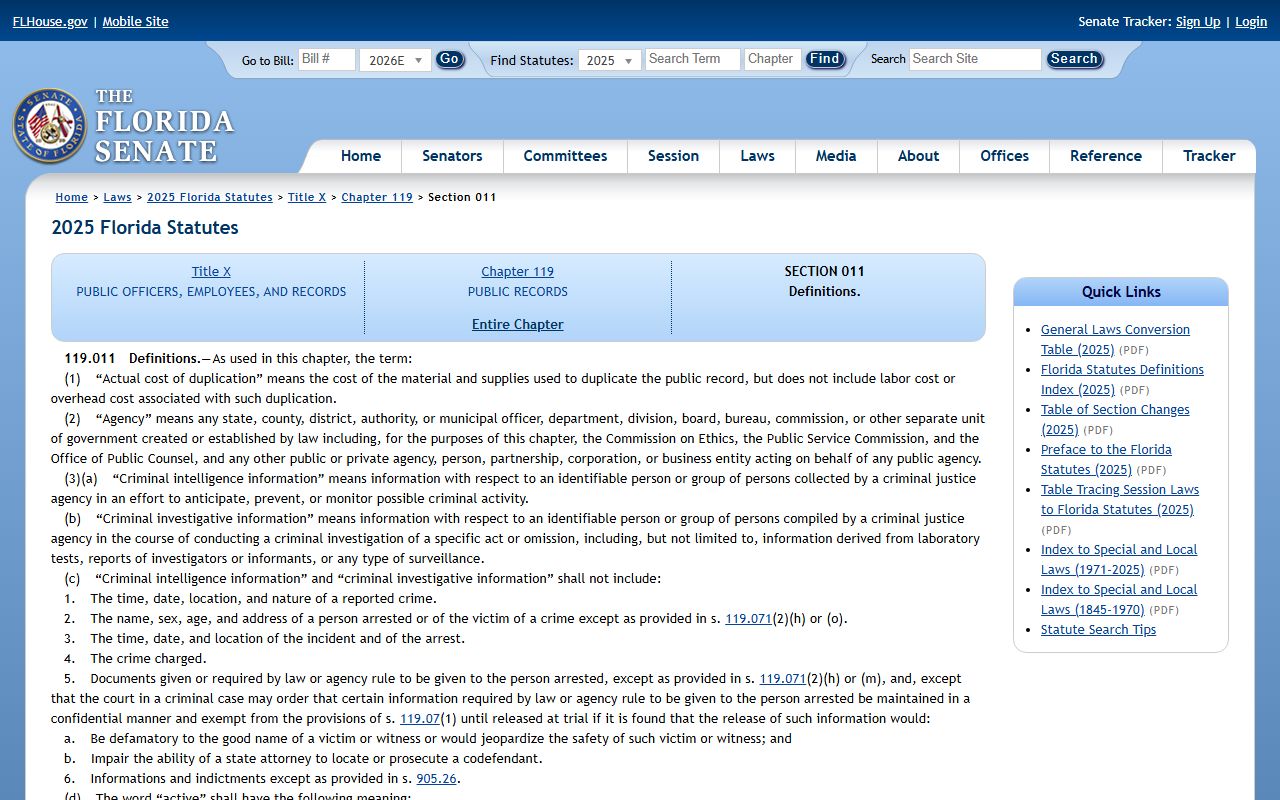
The definition of a public record is wide. Under Fla. Stat. § 119.011, a public record includes papers, maps, photographs, audio, video, data files, and email. The form does not matter. If a Marion County agency made it or got it while doing public business, it is presumed open. A custodian who blocks a Marion County public record must point to a statute that lets them.
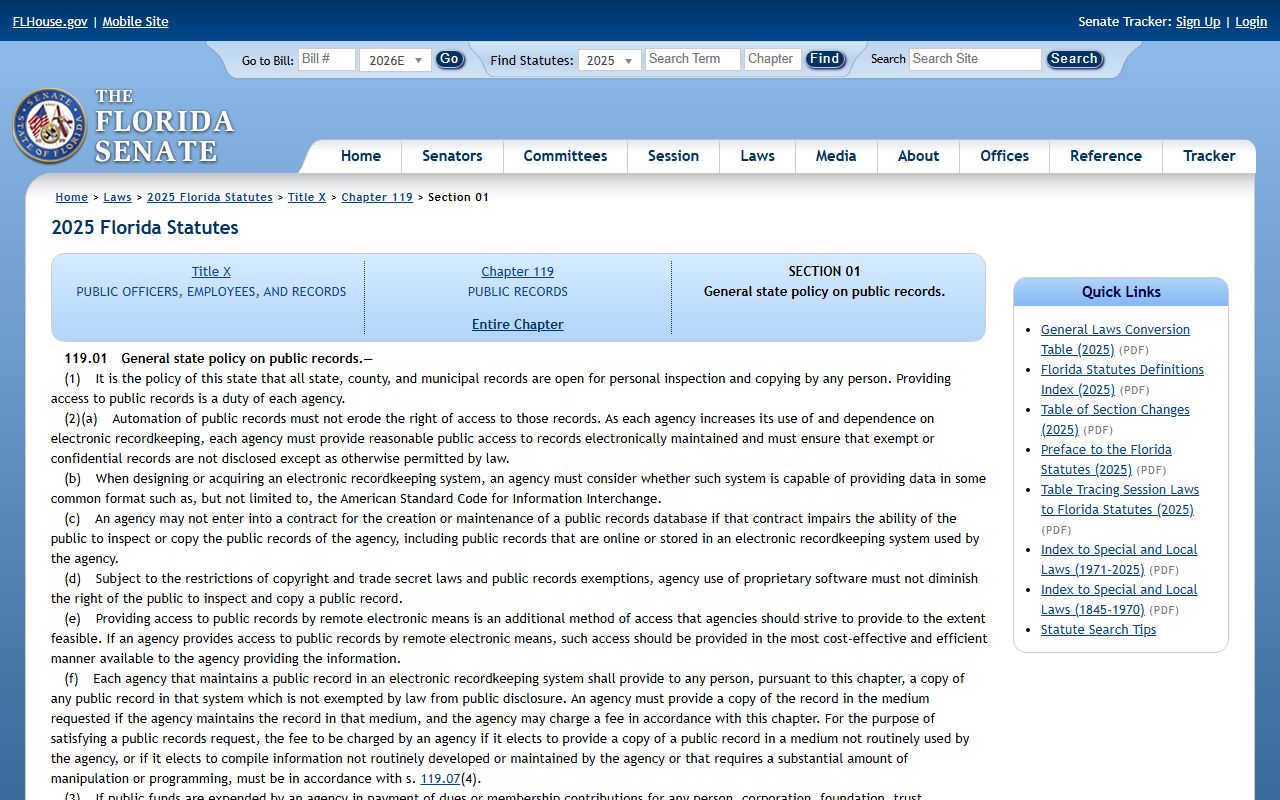
The Florida Sunshine Law and Marion County
The Florida Sunshine Law has two main parts. The first is Article I, section 24 of the Florida Constitution. It locks in a right to look at or copy records of any public body, officer, or employee of the state or local government. The second is Chapter 119, which spells out how that right works day to day. Marion County is a charter county, but charter status does not change the public-records rule. The Clerk of Court, the Sheriff, the county administration, and every advisory board fall under the act.
The state policy is set out in Fla. Stat. § 119.01. Records are open for personal inspection and copying. Marion County's own public-record request page at marionfl.org cites Chapter 119 as the law that controls county records. That presumption of openness drops the burden on the agency, not the requester. The user does not need a reason. A name is not required. A written request is not required by law.
Records Maintained by the Marion County Clerk vs County Government vs Sheriff
Marion County does not have one big record vault. Each office holds its own files. Sending a request to the wrong custodian is the most common reason a Marion County public records request stalls. The Marion County government page is clear that court records, deeds, marriage licenses, divorce records, citations, and arrest records go to the Clerk's Office or the Clerk website. Sheriff case files go to MCSO Records. Board and county-department records go to county administration.
Here is the quick split of who holds what in Marion County:
- Marion County Clerk of the Circuit Court and Comptroller (Gregory C. Harrell). Court files in OCRS, Official Records in NVWeb, marriage licenses, probate, evictions, certified copies, financial records, and Board of County Commissioners minutes. See the Clerk of Court page for office detail.
- Marion County Board of County Commissioners and county departments. Permits, contracts, county budget records, building files, planning records, code enforcement, and most county-employee records. Requests go through marionfl.org/i-want-to/request/public-record-requests.
- Marion County Sheriff's Office (Sheriff Billy Woods). Case reports, arrest reports, incident reports, local background checks, fingerprinting cards, and records of the jail's classification and warrants units. See marionso.com/records.
- Court records held under Florida Rule of General Practice 2.420. The Clerk holds the file, but the court rule and access classes in OCRS set who can pull which document.
- State or federal agencies that touch Marion County. Driver records (FLHSMV), state criminal histories (FDLE), and federal court files (PACER) are not Marion County records, even when a Marion case is the source.
How to File a Public Records Request in Marion County
A Marion County public records request does not need magic words. Florida law lets the requester pick a custodian, ask for records by phone, in person, by mail, or by email, and stay anonymous if they want. A written request is still the safer route because it creates a clear paper trail of what was asked for and when. The steps below cover a county-side request, a Clerk request, and a Sheriff request in the same flow.
- Pick the right custodian. For a court file, marriage license, or recorded deed, go to the Marion County Clerk. For a Sheriff incident or arrest report, go to MCSO Records. For a Board contract, permit, or county-department file, go to Marion County administration.
- Write a short request that names the records, the date range, and the format. Email is fine. The county hub accepts requests by online form, phone, email, fax, and regular mail. The Sheriff accepts in-person, phone, mail, and online requests.
- Send the request and keep a copy. The Sheriff mailing address is PO Box 1987, Ocala, FL 34478 or 692 NW 30th Avenue, Ocala, FL 34475. Email Sheriff records to records@marionso.com.
- Wait for the agency to ack the request. Florida law does not set a fixed day count, but the custodian must answer in a "limited and reasonable time" and can ask for clarification or scope.
- Pay any allowed fees, then get the records. Sheriff case report copies run $0.15 per page. Certified copies cost $1.00. If extensive labor is needed, a clerical research charge may apply.
Public Records Request Form Field Inventory
Marion County offices do not all use the same form. A clean request will still hit the same core fields whether it goes to the Clerk, the Sheriff, or county administration. The table below is the field set the Marion County request hub and Sheriff records page expect. Use it as a checklist when drafting an email or paper letter, or when filling in the online county form.
| Field | Required | Notes |
|---|---|---|
| Requester Name | Recommended | Florida law lets a requester stay anonymous. A name helps the custodian send the file back and ask follow-up questions. |
| Contact Method | Recommended | Email, phone, or mailing address. The Sheriff warns that email addresses are public records under Florida law. |
| Description of Records | Yes | Name the case number, report number, deed book/page, address, or party name. Vague requests get a clarification call. |
| Date Range | No | From and to dates trim the cost. Helpful for email, log, or incident searches that span months. |
| Delivery Format | No | Paper, email PDF, CD, or pickup. The Sheriff defaults to paper unless the requester asks for another format. |
| Certification | No | Tick if the record must be certified. A certified Marion County record carries a $1.00 fee per copy. |
Marion County Clerk Public Records Requests
The Clerk holds the biggest share of public records in Marion County. Clerk Gregory C. Harrell is the elected official recorder and custodian of Official Records, the keeper of court files, and the records officer for the Board of County Commissioners. Most Clerk records can be searched online before any request is sent. Court cases run through the OCRS portal. Deeds, mortgages, liens, and other recorded documents run through the BrowserView/NVWeb Official Records search.
For a record that is not online, the Clerk takes requests in person at the Marion County Judicial Center in Ocala, by mail, or by phone. Certified electronic court records can be ordered through the Clerk's e-certification service linked from the Search Records page at marioncountyclerk.org. Service charges follow Fla. Stat. § 28.24 and the Clerk fee schedule PDF. For a deeper guide to Clerk operations, see the Clerk of the Circuit Court and Comptroller page.
Marion County Government Records Requests
The Marion County Board of County Commissioners and the county's executive departments run a single request hub at marionfl.org/i-want-to/request/public-record-requests. The hub takes a Marion County public records request by online form, phone, email, fax, or regular mail. The page redirects court-record asks, deed asks, marriage and divorce record asks, citations, and arrest records to the Clerk. Sheriff law-enforcement files go to MCSO Records.
The county hub is the right path for records like contracts, vendor files, building department records, planning and zoning files, board minutes for advisory boards, public works data, environmental files, county-employee files (minus exempt sections), and emails of county officers. Some files may need a small per-page fee. Files that need extensive clerical work may carry a labor charge under Fla. Stat. § 119.07.
Marion County Sheriff Records Requests
The Marion County Sheriff's Office Records Division is the public-records desk for MCSO. Records Manager Brittany Colbert runs a team of nine staff that handle incoming reports, retention and disposal, case files, local criminal background checks, report copies, fingerprinting, tickets, and victim and witness information. The division covers Marion County case files only. If the arrest was made by Ocala Police, Belleview, Dunnellon, the Florida Highway Patrol, or FDLE, the user must ask that agency.
Sheriff records hours are Monday and Tuesday 8 a.m. to 5 p.m., Wednesday 8 a.m. to 3:30 p.m., and Thursday and Friday 8 a.m. to 5 p.m. Payment services stop at 4:15 p.m. each day. Fingerprinting runs 8 a.m. to 4:30 p.m. Contact the Records Division at 352-351-6407 or records@marionso.com. The full process and address are on marionso.com/records. For arrest detail, see the criminal records page.
Records That Are Exempt or Restricted Under Florida Law
Not every file held by a Marion County agency is open. Florida law and court rules carve out narrow but firm exemptions. The custodian must cite the statute when blocking or redacting a record. The list below covers the exemptions that come up most often in Marion County public records requests. The full list is much longer, but these are the ones a regular user is most likely to hit.
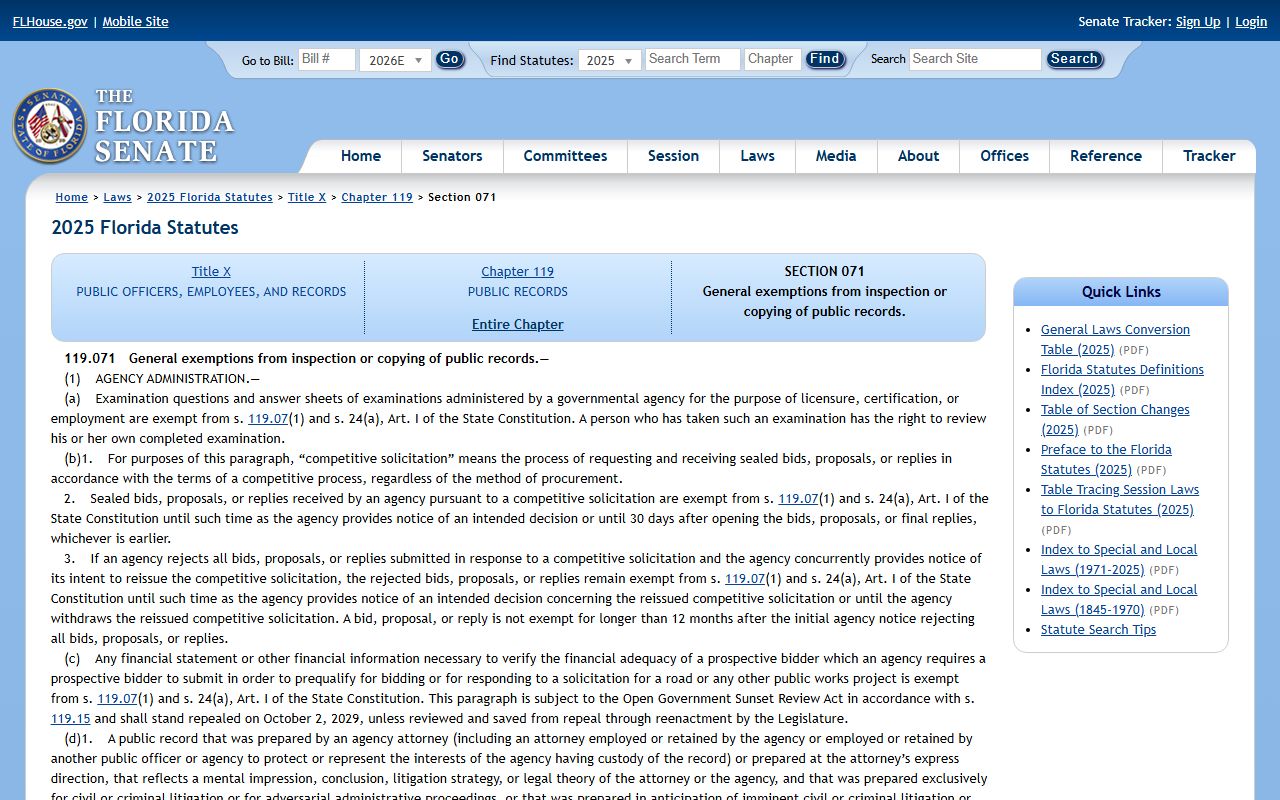
- Active criminal intelligence and investigative information. Blocked under Fla. Stat. § 119.071 until the case is closed or charges are filed.
- Court files with sensitive data. Social Security, bank, and credit card numbers in court and Official Records are protected by Fla. Stat. § 119.0714.
- Sealed or expunged criminal records. Locked under Fla. Stat. §§ 943.0585 and 943.059. The public OCRS search will not show the case once the order is in place.
- Juvenile, dependency, and adoption files. Limited under Fla. Stat. §§ 985.04, 39.0132, and 63.162. Most pieces of these files need a court order.
- Mental-health and Baker Act clinical records. Protected by Fla. Stat. § 394.4615. These can touch court files in commitment cases.
- Victim identity in sexual-offense and child-abuse cases, plus protected addresses for certain protected parties under Marsy's Law and related rules.
Note: A custodian who blocks a Marion County public record must state the basis in writing and cite the exact statute. Court records have an added layer under Florida Rule of General Practice 2.420.
Public Records Fees and Charges
Florida law lets an agency charge for copies, certification, and extensive labor, but only at the rate set by law or backed by actual cost. The Sheriff fee page is the clearest published Marion County example. The Clerk uses the statewide service charges in Fla. Stat. § 28.24, plus the local fee schedule PDF for service work. The table below shows the main fees a Marion County public records request can run into.
| Item | Amount |
|---|---|
| Sheriff case report copies, per page | $0.15 |
| Victim or reporting-person copy when release available with photo ID | No charge |
| Certified copy, Sheriff or Clerk | $1.00 per copy or $1.00 per page if every page certified |
| Local criminal background check, first name | $5.00 |
| Each added background-check name | $1.00 |
| Printed background-check pages | $0.15 per page |
| Notary services at MCSO | $5.00 per stamp |
| Certified will copy at Clerk probate | $1.00 per page plus $2.00 certification |
| Clerical research over 15 minutes | $20 first hour minimum, $5 per quarter hour after |
The clerical research charge is not automatic. It kicks in only when the request takes extensive use of agency time. The Sheriff cites Trout v. Bucher, 205 So. 3d 876 (Fla. 4th DCA 2016), for files that need a specialized employee to pull. Fees for the Clerk side run through the Clerk fee schedule. Some marriage-license and probate fees are flat dollar items, not per-page.
Response Timelines and Remedies
Florida public-records law does not put a hard day count on a response. The case law says a custodian must answer in a "limited and reasonable time." The Marion County hub and the Sheriff Records page both note that the agency will answer the request and quote any fees before pulling the file. Big or complex requests can take longer. The agency can ask the requester to narrow the scope.
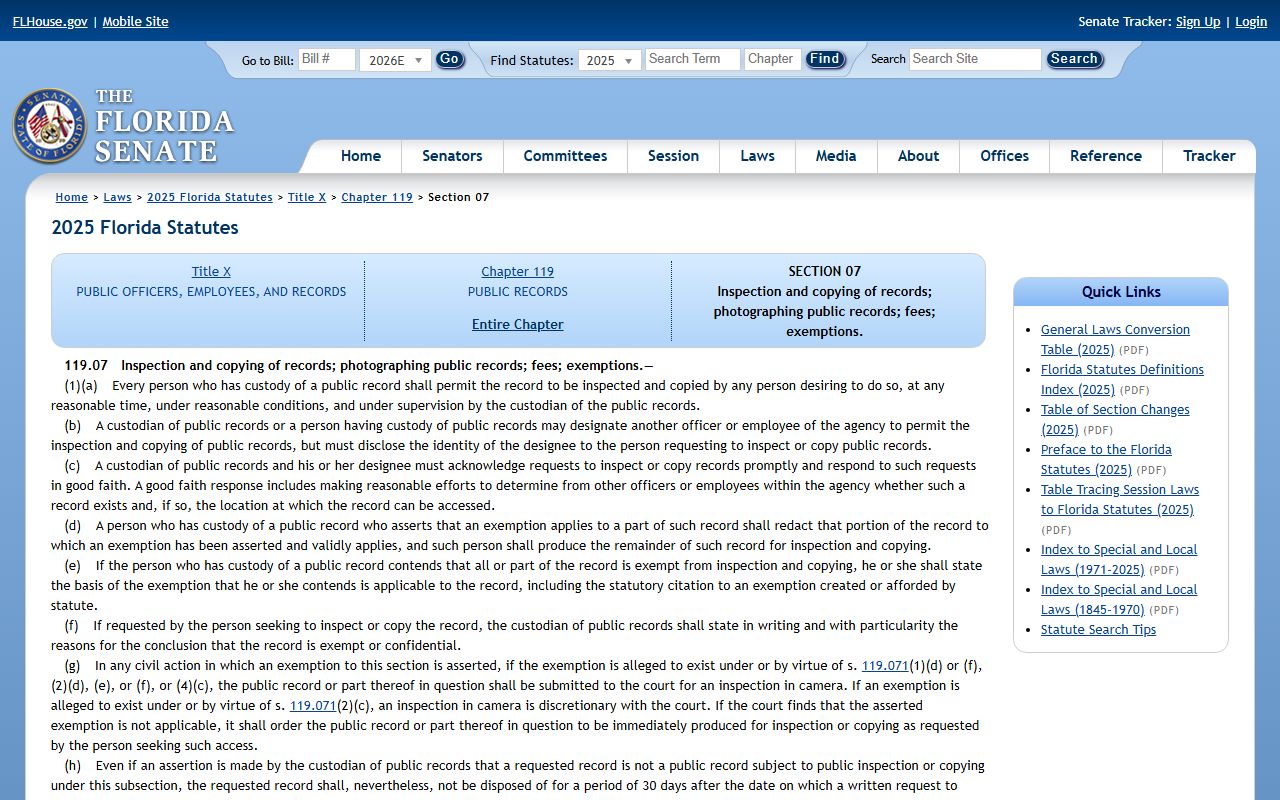
If a Marion County agency wrongly blocks a record, the requester has a real remedy. Fla. Stat. § 119.12 lets the requester file a civil suit and recover attorney fees if the court finds the agency unlawfully refused access. The five-day pre-suit notice rule under that section should be checked first. The Florida Attorney General also publishes a Government-in-the-Sunshine Manual that walks through how a denial should be handled.
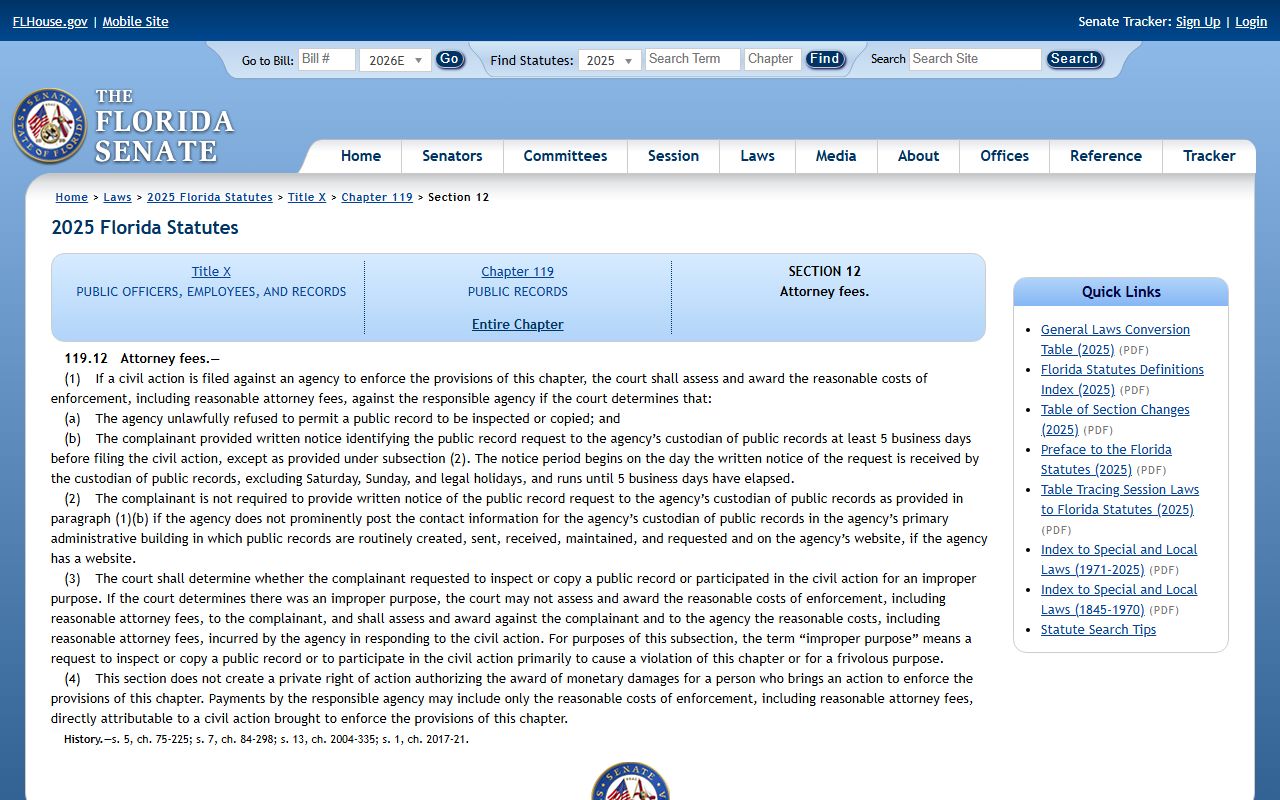
Heads up: The five-day written notice in § 119.12(1)(a) is a gate to attorney-fee recovery. A requester who skips the notice may still get the records, but lose the chance to claim fees. See the FAQ page for more public-records timeline notes.
Marion County Public Records Contact
The two busiest public-records desks in Marion County are the Clerk and the Sheriff. The contact cards below cover both. For Board of County Commissioners records and other county-department files, use the request hub at marionfl.org.
Marion County Clerk of the Circuit Court and Comptroller
Clerk Gregory C. Harrell
Marion County Judicial Center, 110 NW First Avenue, Ocala, FL 34475
Web: marioncountyclerk.org
Marion County Sheriff's Office Records Division
Records Manager Brittany Colbert
692 NW 30th Avenue, Ocala, FL 34475
Mailing: PO Box 1987, Ocala, FL 34478
Phone: 352-351-6407 · Email: records@marionso.com
Web: marionso.com/records
For related Marion County record searches, see court records, arrest records, marriage and divorce records, probate records, traffic court records, the Fifth Judicial Circuit, and the Marion County Court.